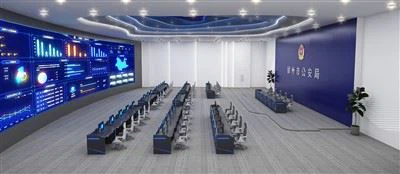
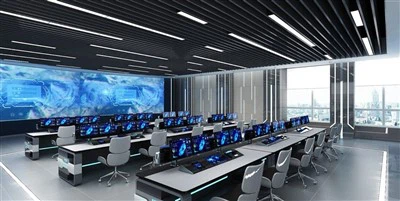
If thermal dissipation is not good, the long term run will be turn to system crashes, and shortened hardware lifespans. When selecting or designing a professional Control Room Console, the thermal design points is a critical point?
1. Systematic Airflow Planning: The "Chimney Effect"
Professional cooling is not about drilling random holes in a cabinet.Which requires an deep understanding of fluid dynamics. We choose a "front-intake, rear-exhaust" airflow logic. Cold air should be drawn in from the lower front of the cabinet and ventilation grilles or exhaust fans located at the top or rear.
2. Balancing Active Cooling with Acoustic Comfort
For high-performance workstations with high heat loads, the ventilation grilles is enough and we need exhaust fans. We must use large-diameter, low-RPM (revolutions per minute) silent fans. This ensures a high air exchange rate per hour without generating noise that would distract operators .
3. Cable Management: Don't Choke the "Airways"
In many design, poor thermal performance is not caused by slow fans, but by cables which blocking the airflow. Cluttered power and signal cables create "localized heat islands." A professional Control Room Console strictly enforces the segregation of power and data cables within dedicated cable trays. Keeping these cables organized along the sides of the cabinet clears the central vertical space, allowing air flowing freely.
4. Thermal Conductivity of Structural Materials
The choice of frame material is the critical factor for heat exchange. We use cold rolled steel to acts as a giant heat sink. Unlike wood or composites, steel has a high thermal conductivity coefficient, assisting in the transfer of heat from the interior to the external environment. Furthermore, the finish should utilize anti-static powder coatings that do not insulate the heat.
5. Integration with Facility Infrastructure (Cold/Hot Aisles)
For command centers, the consoles layout should align with the building's CRAC (Computer Room Air Conditioning) system. If the facility utilizes under-floor air distribution, standard base cutouts enable point-to-point cooling. The integration ensures that hardware stays within its best operating temperature range .
Conclusion: Good thermal layout is from the first design. When designing top-grade control consoles, we fully consider power consumption, equipment stacking density and overall room cooling conditions. We also run thermal simulations based on actual equipment loads to make sure all customer hardware stays well protected.