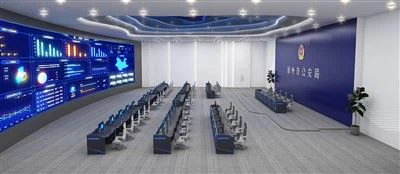
Shenyang Kehua Fuwei Industrial Equipment Manufacturing Co., Ltd. is one of the leading manufacturers and suppliers of air traffic control room console in China, specialized in providing high quality customized service with low price. If you're going to buy durable air traffic control room console made in China, welcome to get quotation from our factory.
Air Traffic Control Room Console
Frame material and gauge. The internal structure of an ATC console should be built from cold-rolled steel or extruded aluminum profiles. Steel frames in the 1.2–2.0mm thickness range are common in Chinese-manufactured consoles, while European and North American manufacturers tend to use modular aluminum extrusion systems that allow angle adjustments without welding. Both approaches work, but they serve different project needs. Steel frames are cost-effective for fixed-height configurations. Aluminum extrusion is preferable when the room layout requires non-standard angles or when the console may be reconfigured later.

Work surface material. The standard specification is high-pressure laminate (HPL) over a substrate of phenolic compact laminate or high-density board. HPL resists scratches, impacts, and liquid spills-critical in a room where coffee cups and headset cables are part of daily life. Some manufacturers add Wilsonart fireproof decorative layers for additional flame resistance.
Load capacity and stability. A single ATC position may carry four to eight monitors, a KVM switch, radio control panels, a telephone turret, and a CPU or thin client. The console structure must distribute this weight without flexing, and monitor mounts must hold displays rock-steady even in vibration-prone tower environments. Screen jitter is not just an annoyance-it causes eye strain during eight-hour shifts.

ATC facilities do not all use the same room arrangement.
A tower working position may have different space and visibility requirements from an area control centre. A training facility may require a different configuration again.
The console can therefore be developed in different layouts, including single-position and multi-position arrangements, depending on the project.
Possible configurations can include:
Straight console layouts for linear operator positions.
Curved layouts where the workstation needs to follow the room geometry or provide an operator-oriented working area.
Multi-position configurations for control rooms with several connected operator stations.
Customized layouts for rooms with specific wall, aisle, equipment or structural constraints.
A modular approach also makes future changes easier to plan, particularly when equipment is upgraded or the number of operator positions changes.

A technical furniture project usually starts with a drawing rather than a shopping cart.
To evaluate a project efficiently, buyers can provide:
- Room dimensions
- Floor plan
- Number of operator positions
- Monitor quantity and model
- Equipment list
- Required console dimensions
- Cable and power requirements
- Preferred materials or finishes
- Existing workstation photographs, where applicable
Based on these inputs, the workstation can be developed around the actual project conditions.
For international projects, the approved drawing can then serve as a reference for manufacturing, inspection, packing and installation.

While the primary application is air traffic control, the same console platforms serve adjacent operational environments:
Tower cab consoles. Low-profile, high-sightline designs optimized for visual observation of the airfield combined with radar and flight data displays.
Approach control (TRACON/APP) rooms. Multi-monitor workstations with high equipment density, typically arranged in clusters for team coordination.
Area control centres (ACC). Larger console spans with integrated communication turrets, often configured for supervisory positions alongside controller positions.
Airport operations and emergency coordination rooms. Fire stations, security control rooms, BMS rooms, and emergency operations centres within the airport perimeter use the same console technology with different equipment fit-outs.

Warranty terms. Industry practice varies. Some manufacturers offer a 10-year warranty. Others provide a lifetime warranty on manufactured parts. For international projects, clarify whether the warranty covers parts only or includes labor and on-site service.
Spare parts availability. Ask for a written commitment on how long the manufacturer will supply replacement components-mounting rails, actuators, work surface panels, cable management accessories. A console purchased in 2026 may still be in service in 2046.
Installation and commissioning. Console installation in an operational ATC facility requires careful planning. Many projects involve "live cutovers" where existing controllers must continue working while new consoles are installed. Ask whether the manufacturer provides on-site installation supervision, and whether consoles can be shipped partially assembled to reduce on-site time.
Preventative maintenance programmes. Annual inspection visits that check actuator function, structural integrity, cable management, and ventilation systems extend console life and catch problems before they cause downtime.
Technical documentation. Complete CAD drawings, installation manuals, and equipment mounting specifications should be provided in the project language. These documents are essential for future facility modifications and equipment upgrades.

Hot Tags: air traffic control room console, China air traffic control room console manufacturers, suppliers, factory, 24 7 control room consoles, Traffic Management Center Console, Ergonomic Console for Chemical Plant Operators, Electric Height Adjustable Control Room Console, Patient Data Integrated radiology workstation, Data Center Control Room Console