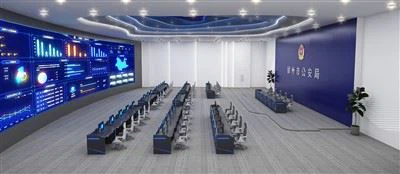
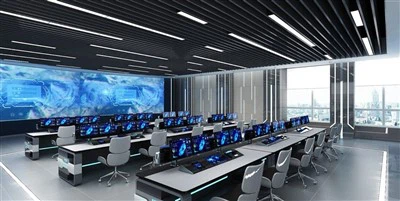
1. Structural Rigidity & Deformation Resistance
The rigidity of cold-rolled steel increases a lot with its thickness. Even a small increase makes the frame much better at resisting bending and deformation.
Thin frames (no more than 1.5mm) easily sag under the weight of monitors and keyboards. Over time, this makes equipment misaligned and hard to use. Standard frames (2.0mm) are the industry norm, balancing rigidity and weight for most common uses. Heavy-duty frames (3.0mm or more) are for 24/7 important environments, like power grid dispatch, and can stand vibrations without damage.
2. Load-Bearing Capacity
Modern control consoles often hold many monitors, servers and other devices, which can be very heavy. Steel thickness directly decides how much weight the frame can support.
Thin frames (1.2–1.5mm) are only good for light use, like single-monitor workstations. Standard 2.0mm frames can support most monitoring setups with 4–6 monitors. Heavy-duty frames (3.0mm or more) are for busy dispatch centers and heavy industrial control, handling much more weight safely.
3. Vibration & Noise Suppression
Control rooms often have vibrations from HVAC systems or servers. Thin steel frames amplify these vibrations, causing screen flicker and operator fatigue.
Frames 2.0mm or thicker can absorb vibrations well, keeping equipment stable and the workspace quiet. Frames 3.0mm or more are ideal for high-precision tasks, like aerospace monitoring, as they isolate vibrations effectively.
4. Durability & Cost Efficiency
A control console is a long-term investment, usually used for 5–10 years. Thicker steel is more resistant to dents, scratches and rust.
Thin steel (≤1.5mm) wears out quickly, lasting only 3–5 years. Standard 2.0mm steel, with proper coating, can last 5–8 years. Heavy-duty 3.0mm steel is perfect for harsh environments, lasting over 10 years. Though thicker steel costs more at first, it saves money in the long run by reducing repairs and replacements.
5. Manufacturing & Design Flexibility
Steel thickness affects how the console is made. Thin steel (less than 1.2mm) is easy to damage during welding and bending. Steel between 1.5–2.0mm is easy to process, allowing for more flexible designs. Thicker steel (≥3.0mm) needs heavy machinery, limiting design but making the frame stronger.
Conclusion
Steel frame thickness is key to a control console's performance. Thin frames are for light use, 2.0mm frames work for most standard needs, and 3.0mm or thicker frames are necessary for important 24/7 environments. When choosing a console, prioritize frame thickness over looks-it's a smarter, more reliable investment.

 English
- English
- Français
- Deutsch
- 日本語
- Italiano
- Español
- Português
- русский
- اردو
- 한국어
- slovenščina
- Latviešu
- Bai Miaowen
- Nederlands
- Svenska
- România limbi
- हिंदी
- slovenčina
- Ελληνικά
- עברית
- Čeština
- বাংলা
- Polski
- فارسی
- عربي
- Melayu
- Lietuvių
- Kreyòl Ayisyen
- magyar
- íslenska
- Việt Nam
- Cymraeg
- Català
- Malti
- O'zbek
- Türkçe
- dansk
- Български
- Eesti
- Gaeilgenah Éireann
- Indonesia
- українська
- suomi
- hrvatski
- ไทย
- bosanski
- Srbija jezik (latinica)
- Norsk