Whether you are upgrading an existing control room or designing a brand-new command center, understanding the core value, key features, industry-specific requirements, and selection criteria of control room consoles is essential to maximize operational efficiency and reduce long-term maintenance costs.
What Is a Professional Control Room Console?
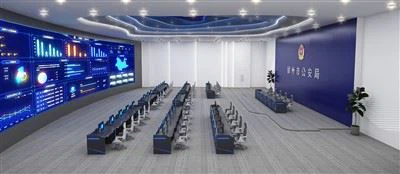
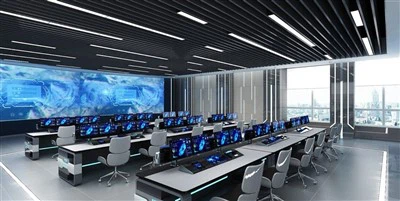
A control room console is a customized workstation engineered exclusively for continuous mission-critical operations. It is designed to accommodate multi-monitor setups, industrial control equipment, communication devices, and wiring systems, while prioritizing operator comfort and workspace orderliness.
Standard office desks focus only on basic office use, while professional control room consoles solve industry pain points includingequipment chaos, signal interference, operator fatigue, messy wiring, and insufficient durability. They comply with international ergonomic standards and 24/7 operation scenarios, making them the core infrastructure of all command and monitoring centers.
Core Functional & Structural Features of High-Quality Control Room Consoles
The performance of a control room console directly determines the stability of daily monitoring work. Premium industrial-grade consoles have the following indispensable core features:
1. Scientific Electromagnetic Isolation & Signal Stability Design
Professional consoles adopt a strong and weak current separation structure with built-in metal isolation partitions. This physical separation completely isolates power lines (strong current) from data lines and optical fibers (weak current), effectively avoiding electromagnetic signal interference. The design ensures zero-delay and zero-error transmission of 4K high-definition video and industrial data, which is critical for public security, energy, financial, and military monitoring scenarios.
2. Systematic 3D Cable Management System
Disordered wiring is a common hidden danger in traditional control rooms. High-end consoles are equipped with a three-dimensional cross cable routing structure, including dedicated cable holes, hidden wiring grooves, and layered storage spaces. This centralized wiring design keeps the desktop tidy, prevents line aging and short circuits caused by long-term exposure, and greatly simplifies daily equipment inspection and maintenance work.
3. Human-Centric Ergonomic Configuration
Control room operators usually work long shifts of 8 hours or more, facing multiple screens for a long time. Modern consoles follow ISO 11064 international control room ergonomic standards and support sit-stand switching functions. The adjustable height, optimized monitor viewing angle, and comfortable armrest and knee space design effectively relieve cervical and lumbar fatigue, reduce operation error rates caused by physical fatigue, and improve long-term work efficiency.
In addition, according to the size of the on-site video wall, consoles can be customized into concave, convex, and linear shapes to ensure the best overall viewing sightline for all operators and realize full coverage of monitoring screens.
4. 24/7 Industrial-Grade Durability
Control room consoles belong to long-term continuous operation equipment. Formal products use high-density flame-retardant plates, anti-scratch and anti-corrosion surface materials, and reinforced steel frame structures. They have excellent wear resistance, pressure resistance, fire resistance, and environmental adaptability, adapting to long-term high-load operation and avoiding deformation, fading, or damage caused by long-term use.
5. Integrated Multi-Device Compatibility
The console reserves standardized installation spaces for monitors, hosts, servers, intercom equipment, radio devices, and industrial controllers. All communication tools and control equipment are integrated into the workstation design in advance, instead of being temporarily assembled later, realizing unified management of equipment and improving the efficiency of emergency response.
Industry-Specific Applications of Control Room Consoles
Different industries have differentiated requirements for console functions and configurations. Professional customized consoles can perfectly adapt to the operational needs of various mission-critical scenarios:
1. Security Operation Centers (SOC) & Public Security Command Centers
Applicable to real-time video monitoring, alarm processing, and emergency scheduling. Consoles support high-density multi-screen splicing, fast equipment switching during shift changes, and confidential equipment storage, ensuring efficient processing of sudden security events.
2. Energy & Utility Monitoring Rooms
Used for power plants, water supply, gas, and new energy monitoring centers. With anti-interference and stable signal transmission design, it matches SCADA industrial control systems to realize real-time monitoring and precise control of energy equipment.
3. Transportation Command Centers
Suitable for highway, railway, airport, and urban traffic command centers. The overall streamlined layout and multi-person collaborative operation design support real-time scheduling of traffic flow and rapid disposal of traffic emergencies.
4. Industrial & Manufacturing Control Rooms
Adapt to factory automated production monitoring, equipment operation scheduling, and production data statistics. The durable and dust-proof structure adapts to industrial environments and ensures the stable operation of production monitoring systems.
5. Emergency & Fire Dispatch Centers
Focus on rapid response and efficient collaboration. The reasonable equipment layout shortens the operation response time, supports 24-hour uninterrupted dispatch work, and provides reliable hardware support for emergency rescue.
How to Choose a Qualified Control Room Console? (Key Buying Tips)
Many buyers only focus on appearance and price when purchasing consoles, ignoring core performance indicators, which leads to frequent failures and high maintenance costs in later use. Here are 4 key selection criteria for reference:
1. Prioritize industrial-grade stability rather than civilian furniture standards: Ensure the product has flame-retardant, anti-corrosion, anti-interference capabilities, and meets 24/7 continuous operation standards.
2. Verify professional cable management and signal isolation design: Strong and weak current separation and three-dimensional wiring are essential to avoid signal failure affecting monitoring work.
3. Match ergonomic design with long-shift work scenarios: Sit-stand adjustment and sightline optimization are key to reducing operator fatigue and improving overall team efficiency.
4. Support personalized industry customization: Different scenarios need targeted size, shape, and equipment layout customization to fit on-site video walls and space layout.
Final Words
A high-quality control room console is not just a piece of furniture, but the core hardware foundation of modern intelligent command and monitoring systems. It connects operators, monitoring equipment, and scheduling systems, ensuring the stability, efficiency, and safety of all mission-critical work.
With the continuous upgrading of industrial intelligence and smart city construction, customized, ergonomic, and high-stability control room consoles have become the standard configuration of various command centers. Choosing a professional and reliable console solution can effectively reduce operational risks and create long-term value for enterprise and public facility monitoring work.